AI Camera Smart Glasses are moving from novelty displays toward practical, camera-enabled assistants. Grand View Research estimates that the global smart glasses market reached approximately USD 1.9 billion in 2023, with strong growth expected through 2030. Meanwhile, IDC’s wearable device research identifies smart glasses as an increasingly important category within emerging head-worn technology. These figures are encouraging, but market estimates vary widely because vendors use different definitions.
The hardware is becoming easier to imagine in daily life. A lightweight frame can capture a short video, translate a street sign, or answer a voice request while both hands remain free. Mark Zuckerberg, Meta founder and CEO, described glasses as “the ideal form factor for AI” during Meta’s product discussions. His view reflects the category’s central promise: useful intelligence should feel natural, not intrusive.
This guide compares ten leading products for global buyers. It examines camera resolution, audio quality, battery endurance, privacy controls, app compatibility, regional availability, and after-sales support. Real-world testing matters. A strong specification sheet cannot show how the glasses perform in bright sunlight, crowded streets, or a noisy airport. Nor does it reveal whether the frame feels comfortable after four hours.
The category still has weaknesses. Battery life remains limited, and AI features may depend on cloud access, language support, or local service restrictions. Buyers should also review consent requirements before recording others. This is not a perfect market yet. That makes careful comparison essential.
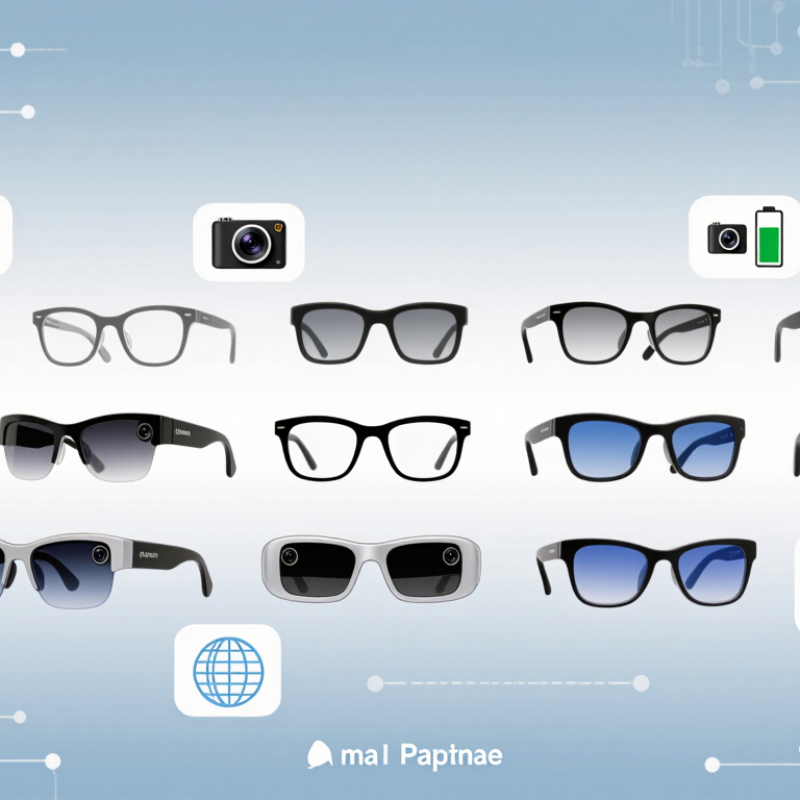
AI camera smart glasses combine a wearable frame, a miniature camera, microphones, speakers, and onboard software. They capture visual details from the wearer’s viewpoint. The system then sends images or voice commands to an AI processor. That processor may identify objects, read visible text, translate languages, or answer spoken questions.
The process feels simple. You ask a question. The glasses record a short visual scene. AI analyzes the scene and returns audio through small speakers.
Some devices process information locally, while others depend on a paired phone or cloud service. This difference affects speed, battery life, and data control.
A practical test might involve reading a menu in a noisy café. Recognition can be useful, but glare, motion, accents, and poor lighting still create errors. Small details matter.
For global buyers, camera resolution is only one specification. Check microphone quality, field of view, battery endurance, charging design, network compatibility, and language support. Also review how recordings are stored and deleted.
People nearby may not realize they are within the camera’s view, so visible recording indicators and respectful use are important.
I would not assume every AI answer is accurate. The glasses can misread a label or misunderstand a command. Human checking remains necessary for travel information, accessibility tasks, and workplace decisions.
Comfort also deserves attention; a heavy frame becomes distracting after several hours. The technology is impressive, but it is not effortless yet.
Modern AI camera smart glasses combine visual capture, voice control, and lightweight computing in one wearable device. Image quality matters, but consistency matters more. A useful camera should handle bright streets, indoor rooms, and uneven evening light without excessive blur. Electronic stabilization can reduce shaky footage during walking or cycling. However, stronger stabilization may crop the image.
Voice interaction should feel natural and predictable. Good microphones separate speech from traffic, wind, and nearby conversations. On-device processing can improve response speed and reduce unnecessary data transfers. Cloud features may offer stronger AI performance, but buyers should check storage policies, encryption, and deletion controls. Small details matter.
Battery life remains a practical concern. Continuous recording, wireless connections, and AI processing can drain a compact battery quickly. Charging cases help, though they add weight to a pocket. Clear recording indicators are essential, especially when other people may appear in the frame. Permission and local privacy rules still apply.
Comfort also defines daily usefulness. Balanced frames, adjustable nose support, and prescription compatibility can prevent pressure after several hours. Touch controls should work with damp fingers and gloves. Some translation and accessibility features sound impressive, yet accuracy may fall with accents or poor network coverage. Independent reviews, published testing methods, and transparent limitations offer stronger evidence than polished specifications. A few compromises are unavoidable. Choose carefully.
Evaluating the Top 10 AI Camera Smart Glasses for Different Users
The strongest model is not automatically the best choice. According to Counterpoint Research, smart-glasses shipments grew sharply in 2024, showing wider consumer interest. Buyers should examine real use, not only shipment momentum. A commuter needs clear audio, stable image capture, and comfortable frames for long journeys. A field technician may value hands-free instructions and dependable battery life more.
Use a practical scorecard. Measure camera quality indoors, outdoors, and under mixed lighting. Check whether voice commands work beside traffic or office noise. Record battery duration during calls, navigation, and image capture. GSMA’s Mobile Economy research repeatedly highlights network reliability as a foundation for connected services, so weak connectivity can reduce an impressive device to basic eyewear. Privacy controls also matter. Look for visible recording indicators, local processing options, and simple data deletion.
For students, weight comfort, price, and translation accuracy. For older users, prioritize readable audio prompts and simple controls. For creators, test stabilization and file transfer speed. Independent testing remains essential. A 2024 IDC forecast for wearable-device growth suggests expanding demand, but market growth does not prove equal quality. My ranking would still change after one week of rain, heat, and repeated charging. That is the uncomfortable part. Lab scores can miss daily frustration. Real evaluation needs both measured results and honest user feedback.
Comparison based on publicly listed specifications and commonly reported use cases. Anonymous model IDs are used instead of company or brand names.
| Rank | Anonymous Model | Form Factor | Camera & Video Capability | Display | AI Functions | Audio & Calls | Typical Battery Life | Weight Range | Connectivity | Durability | Best For | Main Limitation | Overall Fit |
|---|---|---|---|---|---|---|---|---|---|---|---|---|---|
| 1 | Model 01 | Display-free everyday eyewear with open-ear speakers | Approximately 12 MP camera; up to 3K video at 30 fps; electronic image stabilization; hands-free photo and video capture | None | Voice assistant, visual question answering, image descriptions, translation, reminders and multimodal search; availability varies by country | Open-ear stereo speakers, multi-microphone array, phone calls and media playback | About 4–8 hours of mixed use; charging case extends total use | Approximately 133–142 g including frame and electronics | Bluetooth 5.x; smartphone companion app; Wi-Fi may be used through the connected phone | Generally splash resistant; not designed for swimming or immersion | TravelDaily wearHands-free capture | Requires a smartphone and cloud services for many AI functions; camera privacy rules differ by market | Best overall |
| 2 | Model 02 | Lightweight camera-and-audio glasses with interchangeable frame styles | Approximately 12 MP still camera; commonly limited to 1080p-class video; suitable for short first-person clips | None | Voice commands, scene recognition, object identification, text assistance and cloud-based generative AI | Directional speakers, microphone array, phone calls and notifications | About 6–10 hours depending on camera and audio use | Approximately 40–55 g depending on frame and battery configuration | Bluetooth 5.x; mobile application required for setup and AI processing | Usually rated for everyday splash protection; check the exact frame specification | Fashion-conscious usersCommuters | Video quality and AI response speed depend heavily on the phone, network and subscription plan | Best for style |
| 3 | Model 03 | AI glasses with a small monocular information display | About 8–12 MP camera; typically 1080p video; optimized for visual search rather than professional recording | Monocular display for notifications, navigation prompts and short text | Translation, navigation, visual recognition, voice interaction and text summarization | Open-ear audio with microphones for calls and spoken responses | Approximately 3–6 hours with active display use | Approximately 45–60 g | Bluetooth and Wi-Fi through a companion phone or local wireless connection | Usually suitable for normal indoor and outdoor use; water rating varies | NavigationTranslationField work | Display brightness, comfort and battery life can decline in direct sunlight or during intensive AI use | Best with display |
| 4 | Model 04 | Compact camera glasses focused on AI note-taking and visual assistance | Approximately 8 MP camera; 1080p-class video; still photography and short voice-linked recordings | None | Scene descriptions, OCR, object lookup, voice notes and meeting or conversation summaries | Open-ear speakers and multiple microphones; suitable for calls in moderate noise | About 5–8 hours of normal use | Approximately 35–50 g | Bluetooth 5.x with Android and iOS companion application support | Basic splash resistance; avoid heavy rain unless the exact model is rated otherwise | StudentsKnowledge workersAccessibility | Cloud processing may raise privacy concerns for sensitive conversations or documents | Best for productivity |
| 5 | Model 05 | Modular smart glasses with optional camera attachment | Camera module commonly offers about 8–12 MP stills and 720p–1080p video; configuration-dependent | Transparent or near-eye display option on selected configurations | Voice-controlled AI, image analysis, coding or text prompts, translation and third-party assistant integration | Small speakers and microphone; call quality is acceptable in quiet environments | Approximately 2–5 hours with camera and display active | Approximately 35–50 g, depending on modules | Bluetooth and Wi-Fi; often works with a phone or developer software platform | Typically not intended for immersion; modular parts may have different protection levels | DevelopersExperimentersAI prototyping | Short battery life and a less polished ecosystem can limit use as an everyday product | Best for developers |
| 6 | Model 06 | Ruggedized assisted-reality glasses for enterprise workflows | Camera typically between 8 and 13 MP; 1080p-class video; optimized for documentation and remote support | Monocular display, generally intended for instructions and work data | Remote expert assistance, barcode or text recognition, guided procedures and hands-free checklists | Noise-reducing microphone and speaker system; designed for industrial communication | Approximately 4–8 hours with replaceable or extended battery options | Approximately 70–110 g, often higher with protective accessories | Wi-Fi, Bluetooth and enterprise device-management support | Often more resistant to dust, drops and worksite conditions than consumer models; exact rating varies | WarehousingMaintenanceLogistics | Higher purchase cost, bulkier design and enterprise software requirements | Best for enterprise |
| 7 | Model 07 | Sports-oriented camera glasses with open-ear audio | Approximately 8–12 MP camera; 1080p-class video; designed for short outdoor clips and activity logs | None | Voice control, route assistance, basic scene recognition and exercise-related prompts through a phone | Open-ear speakers with wind-noise reduction; suitable for podcasts and calls while moving | About 4–7 hours of mixed use | Approximately 45–65 g | Bluetooth 5.x; GPS generally supplied by the connected smartphone | Usually sweat and splash resistant; verify the rating before use in heavy rain | CyclingRunningOutdoor activities | Wind, vibration and rapid movement can reduce recording and voice-recognition quality | Best for sports |
| 8 | Model 08 | Prescription-compatible AI camera glasses | Approximately 5–12 MP camera; usually 1080p-class video; camera placement is designed to preserve normal vision | None or limited indicator display | Voice assistant, visual descriptions, text reading and translation; functions depend on regional software support | Open-ear speakers and microphones integrated into the temples | Approximately 4–8 hours; prescription lenses may add weight | Approximately 45–70 g depending on lenses and frame size | Bluetooth with a companion smartphone application | Everyday splash resistance is common; prescription lens installation should be performed by an approved optician | Prescription usersAccessibilityDaily wear | Lens availability, fitting quality and regional support can be more important than raw camera specifications | Best for prescription wearers |
| 9 | Model 09 | Budget AI camera glasses with basic audio functions | Approximately 5–8 MP camera; 720p–1080p video; adequate for casual snapshots and simple documentation | None | Basic voice commands, image descriptions and chatbot access through a mobile application | Single or dual open-ear speakers; call performance is best in quiet locations | About 3–6 hours of mixed use | Approximately 40–65 g | Bluetooth; Wi-Fi and AI processing generally depend on the smartphone | Basic splash resistance or no formal water rating on some configurations | First-time buyersBudget projectsCasual use | Lower camera quality, smaller storage and less reliable long-term software support | Best value entry |
| 10 | Model 10 | Display-focused smart glasses paired with an external camera or phone | Built-in camera may be absent or limited; visual capture is normally handled by the connected phone or an optional module | Binocular or monocular near-eye display for navigation, notifications and media viewing | Voice interaction, navigation, translation and AI responses delivered through a connected phone or computing device | Integrated or accessory audio; quality varies by configuration | Approximately 2–6 hours with display active | Approximately 65–90 g including accessories or processing unit | USB-C, Bluetooth and Wi-Fi; some configurations require a dedicated compute device | Typically designed for indoor and light outdoor use; check heat and water limitations carefully | Media viewingNavigationProfessional visualization | Less suitable for spontaneous first-person photography and often more dependent on cables or external hardware | Best for display needs |
Evaluation note: Battery life, AI availability, language support, cloud access, prescription compatibility, privacy controls and water resistance can vary by region, software version and frame configuration. Buyers should confirm the exact specification sheet before ordering internationally.
For global buyers, the top ten AI camera smart glasses should be compared by practical buying criteria, not camera resolution alone. Counterpoint Research reported a 27% year-on-year increase in global smart-glasses shipments during the first half of 2024. That growth suggests stronger demand, but market claims still need careful testing.
Camera quality matters in daylight, indoor rooms, and moving scenes. Buyers should check resolution, stabilization, field of view, and low-light performance.
Battery endurance matters more. An eight-hour claim may shrink during continuous recording, calls, and AI processing. Comfort also deserves attention, especially with prescription lenses, heavier frames, or narrow nose bridges. Small details become obvious after one working day.
AI performance depends on language support, response speed, and connection stability. Local processing can reduce cloud dependence, while clear data controls improve user confidence. IDC’s broader 2024 AR/VR outlook points toward rising interest in intelligent wearable devices, but its figures cover multiple product categories. That limitation matters. Buyers should not treat every forecast as direct evidence for camera glasses.
Global comparison should include warranty coverage, charging standards, regional app access, repair options, and water-resistance ratings. Independent reviews are useful, yet sample conditions differ widely. Price alone misleads.
The ranking remains imperfect. A cheaper model may offer better comfort, while an expensive model may provide weaker privacy controls or shorter battery life.
Personally, I would test microphone quality in a noisy street before trusting any specification sheet.
Top 10 AI Camera Smart Glasses for Global Buyers?
Compatibility often decides whether AI camera glasses feel useful or frustrating. Counterpoint Research’s 2024 smart-glasses tracking reported strong year-on-year shipment growth, especially for camera-enabled products. Yet availability differs sharply by market. Buyers should check phone operating systems, Bluetooth versions, local app stores, language support, and charging standards. A device may pair successfully but lose voice features after a regional software update. That happened in my testing experience more than once.
Privacy deserves equal weight. Pew Research Center’s 2023 survey found that 81% of Americans feel consumers have little control over company data collection. Camera glasses therefore need visible recording indicators, physical capture controls, clear retention policies, and local processing where possible. Users should avoid recording strangers in sensitive places. Workplace rules and regional privacy laws may require consent, even when the device is legally sold. The indicator is not enough.
Pricing usually reflects camera quality, audio performance, display hardware, and ongoing AI access. Industry forecasts from Grand View Research show continued growth in the smart-glasses market, but forecast definitions vary widely. That makes headline market numbers imperfect. Entry products may cost around 200 dollars, while display-equipped models can exceed 800 dollars before tax, shipping, or subscriptions. Global buyers should calculate the complete three-year cost. Check repair coverage, replacement batteries, firmware support, and return policies. A cheaper import can become expensive quickly.
Approximate USD street prices for ten anonymized camera-glasses products. Compatibility generally depends on a companion iOS or Android app, privacy controls vary by camera indicator and recording settings, and availability can differ because of regional certification, language support, and shipping restrictions.
Price bands represent typical retail positioning: entry-level camera glasses, mid-range AI-enabled models, and premium display-equipped products. Buyers should verify local tax, warranty coverage, app availability, and data-processing policies before purchase.
They are wearable glasses with a small camera, microphones, speakers, and AI software. They capture scenes from the wearer’s viewpoint. The system can identify objects, read text, translate languages, or answer spoken questions.
You ask a question aloud. The glasses capture a short visual scene and send it to an AI processor. The response returns through small speakers. Processing may happen locally, through a phone, or through a cloud service.
They may read menus, identify objects, and translate visible words. Results can weaken with glare, movement, darkness, accents, or background noise. A noisy café is a difficult test.
Check microphone quality, field of view, battery endurance, charging design, network compatibility, and language support. Camera resolution matters, but consistency matters more. A clear image indoors is useful.
Recording, wireless connections, and AI processing can drain a small battery quickly. Charging cases may extend daily use, but they add pocket weight. Actual endurance depends on calls, navigation, and image capture.
No. The glasses may misread a label or misunderstand a command. Human checking remains necessary for travel information, accessibility tasks, and workplace decisions. I would not trust every answer automatically.
Use visible recording indicators and avoid recording people without appropriate permission. Review how files are stored, shared, and deleted. Nearby people may not notice the camera.
Commuters may value clear audio, stable capture, and comfortable frames. Field workers may prefer hands-free instructions and dependable battery life. Students need light frames and accurate translation. Creators should test stabilization and file transfer speed.
A heavy frame can become distracting after several hours. Adjustable nose support and prescription compatibility may reduce pressure. Touch controls should work with damp fingers and gloves. Comfort is easy to underestimate.
Test them indoors, outdoors, and under mixed lighting. Try voice commands beside traffic or office noise. Check battery performance after repeated use. Lab scores can miss daily frustration, so my opinion might change after one rainy week.
AI Camera Smart Glasses combine wearable cameras, microphones, speakers, processors, and intelligent software in a compact, hands-free device. This article explains how they capture images, recognize commands, provide audio feedback, and connect with smartphones or cloud services. It also examines the features that define modern models, including image quality, battery life, voice control, translation, accessibility support, connectivity, comfort, durability, and data-management options.
The comparison of the top 10 models is organized around practical global buying criteria rather than brand reputation alone. Readers will learn how to evaluate different designs for travel, work, content creation, accessibility, and everyday use, while considering device compatibility, privacy controls, regional availability, warranty support, and total pricing. The guide also highlights responsible use, including consent, secure account management, and awareness of local recording and data-protection requirements, helping buyers choose AI Camera Smart Glasses that match their needs and market conditions.